
Our digitalized production workflows reduce error rates and increase your quality and on-time delivery. Digitally guided quality checks and maintenance procedures promote immediate corrective action.
Improve Quality
Greater process reliability increases productivity
Optimize Resources
Better planning increases machine utilization
Our complete production and machine data acquisition creates transparency for efficient production planning and control. With meaningful KPIs and precise analyses, we strengthen your strategic and operational decision-making.
Reduce Complexity
Less effort thanks to paperless manufacturing
Digitalized processes replace time-consuming routine tasks and simplify existing system landscapes. At the same time, real-time digital data supports your shop-floor management and strengthens collaboration between departments.

Why a Manufacturing
Execution System (MES)?
MES – The Essential Complement to ERP
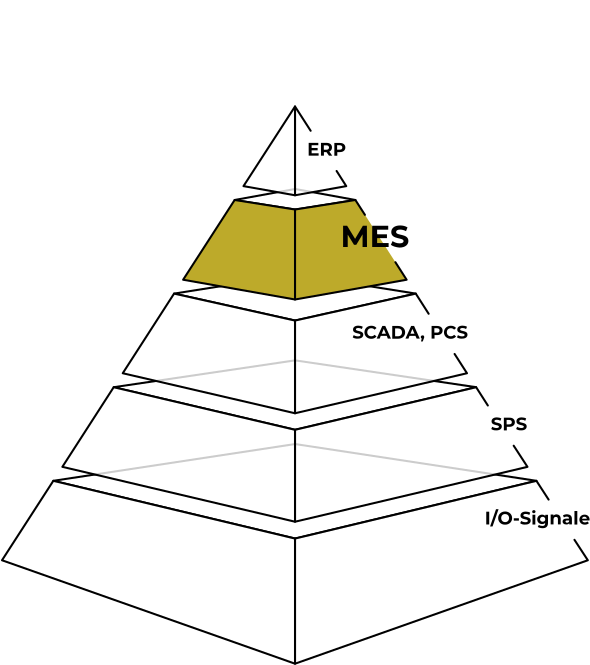
ERP systems often lack the level of detail needed for production tasks and are not user-friendly enough. They cannot adequately process events such as machine starts and stops, interruptions, and quality reports. MES systems, on the other hand, enable timely planning and control of all manufacturing processes and provide an up-to-date picture of the flow of materials and information within the supply chain.
MES – The Foundation for Connected Manufacturing
MES solutions enable a seamless flow of information between the enterprise level and the automation level. Costly interfaces between the shop floor and ERP are no longer needed. An MES forms the basis for fully connected production in line with Industry 4.0 concepts. Real-time transparency, central data management, and decentralized intelligence are key aspects that an MES offers for the smart factory of the future.
MES – A Building Block of the Value Chain
MES solutions ensure greater process efficiency, greater sustainability in the use of resources and energy, and more product innovation. Thanks to their interoperability, they are a key building block in the end-to-end value chain, from the shop floor through the enterprise level to the customers.
- Creation of inspection plans & procedures
- In-process control (IPC)
- Autonomous maintenance
- Management of warning limits for target/actual deviations
- Alerts and escalation measures
- Data connection of quality assurance devices
- Test equipment management
- Statistical process control (SPC)
- Outgoing goods inspection
Traceability
- Batch management & serial numbers
- Recording of process values
- Analyses and logs
Production Data Acquisition (PDA)
- Bills of materials and routings
- Recording and display of order-related data
- Management & release of production orders
- Reporting of actual times, quantities, and scrap
Machine Data Acquisition (MDA)
- Recording of statuses and performance
- Process data acquisition
- Analysis of downtime, setup times, and scrap
- Provision of OEE data
- KPI dashboards
- Energy monitoring
- System architecture
- Monitoring
- Connection of machines and devices
- Interfaces (ERP, DMS)
- User management
- Languages
- Bills of materials & routings
- Real-time order progress
- Production variants
- Shift log entries & review
- Workflow management
- Reporting
- Archiving
Detailed Scheduling & Control
- Gantt chart (drag & drop)
- Setup- and sequence-optimized scheduling
- Resource planning (workstations, tools)
- Planning with multi-level order networks
- Automatic availability check (material, resources)
- Automatic capacity check (machines, equipment)
- Management of production warehouses & resources
- Recipe management
- Visualization of documents & instructions
- Material validation (batch, release status)
- Integrated weighing process with log
- Material flow control with container management
- Inline label printing
Management of different order types
- Bills of materials and routings
- Process orders
- Inspection orders
- Maintenance orders
- Different planning and control rules for each order type
What Our Customers Say

Thanks to the flexible MES solution from ACS Solution, we were able not only to master the complexity of our manufacturing processes at all our sites but also to make them more efficient and productive. The tailored 24/7 support gives us additional peace of mind to keep our operations running at all times.
What Our Customers Say

With the MES solution from ACS Solution, we were able to make our order control and quality assurance efficient and completely paperless. Sophisticated planning tools also enable us to continuously optimize our machine utilization. Our efficient dashboards allow us to monitor our processes precisely and in a targeted way.
What Our Customers Say

ACS Solution’s long-standing expertise and our trusted partnership enable us to respond flexibly to new requirements. Thanks to their solutions, we can make our production workflow efficient, ensure complete transparency, and guarantee our customers high delivery reliability.
What Our Customers Say

The MES modules from ACS Solution give us an efficient platform for automated, multi-level process planning. Thanks to the integrated consumption management and clear performance KPIs, we can optimally monitor and control our manufacturing processes.
What Our Customers Say

Together with ACS’s MES team and solution architects, we were able to redefine our processes and system landscape. Their remarkable expertise and holistic view of technology, sustainability, and business processes were decisive. Thanks to their structured project management and goal-oriented implementation, we have taken a significant step toward digitalizing our business.
What Our Customers Say

The challenge: a tight time frame and fixed technical requirements. With ACS at our side, we found not only quick help but also a well-thought-out concept. Their expertise and the “Ready to Use” solution enabled us to implement a system that puts quality and precision first in the shortest possible time. To the complete satisfaction of our end customers.